
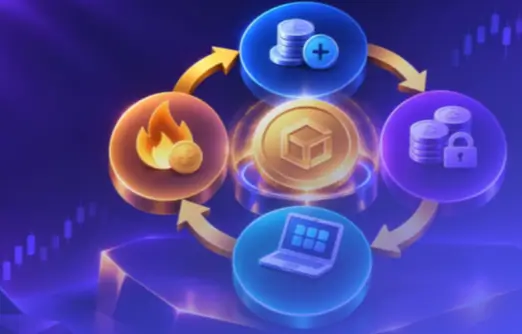
Token supply and distribution must be defined clearly, including total issuance, minting caps, and burn mechanisms. The links between scarcity, predictable issuance, and governance rights shape incentives, trust, and participation. Practical methods—airdrops, unlocks, and rewards—require transparent, verifiable disclosure to preserve credibility. Treasury, staking, and governance decisions influence funding, price dynamics, and long-term resilience. As these elements interact, the consequences for ecosystem health become increasingly consequential, inviting closer scrutiny of incentives and controls. The implications demand careful consideration before proceeding.
Define Token Supply Clearly
Token supply refers to the total number of tokens that will ever exist for a given cryptocurrency or tokenized system. Conceptually, it encompasses token creation, burn mechanisms, and governance rights shaping issuance trajectories. Clear definitions distinguish inflation vs. deflation risks, clarifying how minting caps or dynamic burns influence scarcity, stakeholder influence, and long-run economic security without conflating supply with immediate market prices.
How Token Supply Shapes Value and Governance
The total quantity of issued units and the mechanics governing their creation or destruction directly influence both perceived and intrinsic value, as scarcity, predictable issuance, and governance rights shape incentives for holders, users, and participants.
Token inflation and governance incentives must be analyzed to reveal how supply structure molds trust, risk, and participation in decentralized ecosystems.
monetary policy, vote dynamics
See also: How Technology Is Transforming Businesses
Unlocks, Airdrops, and Rewards: Distribution in Practice
Unlocks, airdrops, and rewards constitute practical instruments for distributing tokens, shaping user onboarding, and aligning incentives across ecosystems.
The analysis examines mechanisms, fairness, and disclosure standards, noting that unrelated auditing and undisclosed allocations can undermine credibility and participation.
Practitioners should prioritize transparent criteria, verifiable distribution logs, and rigorous governance to sustain trust while balancing innovation with accountability.
Treasury, Staking, and Price Dynamics
Treasury management, staking mechanics, and price dynamics collectively shape a token’s long-term value and ecosystem resilience.
The analysis examines how Treasury mechanics allocate resources to funding development, security, and contingency buffers, while staking incentives align participant incentives with protocol health.
Price dynamics reflect capitalization, liquidity, and demand cycles, influencing investor confidence and staking participation, thereby reinforcing sustainable growth and governance participation.
Conclusion
Understanding token supply and distribution requires precise accounting of issuance, caps, and burn mechanics, plus transparent unlocks and rewards. When supply growth is predictable and governance rights are clearly defined, incentives align governance participation with long-term value. Conversely, opaque minting or front-loaded distributions risk trust erosion and price instability. In essence, a well-structured supply acts as a compass for stakeholders, guiding sustainable growth; a well-communicated distribution is the steady wind that steadies the ship. Navigation hinges on transparent governance.
